
Day Two - Tuesday 30 June 2026
Click on each stream box above the programme listing to view the sessions within each stream.
Click on the button below to view the day one programme.
Churchill Auditorium - Ground floor
Join us as we begin day two of the 2nd Annual Global AI Conference 2026. The morning opens with a brief welcome before we dive into an inspiring keynote session to set the tone for another day of learning, collaboration and innovation.
09:00 - 09:05 Opening remarks - Professor Owen Arthurs, AI Conference Committee Chair
09:05 - 09:40 Moving fast and not breaking things: the future of regulating AI in healthcare - Professor Alastair Denniston, Chair of the National Commission, Regulation of AI in healthcare
In this keynote session, we will explore how regulation can be used as a tool to help shape the future of AI-enabled healthcare, and how we ensure it delivers the kind of health system we actually want. Drawing on the work of the Commission, the session will share insights from public, front-line professionals, and international experts, and consider what this perspectives could mean for the future regulation of AI in the UK. We will examine how the Commission is helping set the direction and the guard-rails that will define the future regulatory framework within which we will all be working and experiencing healthcare in. Ultimately, the session will focus on how we achieve the ‘Goldilocks’ state: creating regulation that is both sufficient and efficient, enabling innovation that will improve care while ensuring patient safety.
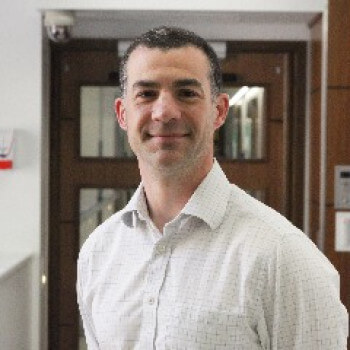

St James room - floor 4
Can AI help radiologists train more effectively and even pass their exams? This session explores the growing range of AI tools available to trainees, from chatbots and vibe coding to interactive question banks. Discover how these technologies are being used to support learning, enhance exam preparation, and personalise training experiences.
St James room - floor 4

St James room - floor 4
This session explores how AI can augment radiologists to work at a “superhuman” level by enhancing skills, extending capabilities, and improving productivity and wellbeing. Moving beyond a purely educational focus, it will highlight practical applications of AI in research, workflow optimisation, and clinical practice, including ambient scribe reporting, supervised autonomous reporting, vibe coding, and emerging agentic AI tools. The talk will consider how these technologies are reshaping how radiologists learn, work, and innovate, and what this means for the future role of the clinician.
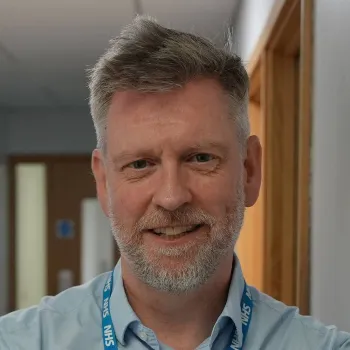
St James room - floor 4
The FRCR 2A exam is a milestone every radiology trainee must clear. But most training resources are outdated and no longer reflect contemporary questions. Multi-step thinking is now essential, mirroring the diagnostic reasoning of daily radiology practice. Radiology.live was born in summer 2024 to solve this. By fine-tuning LLMs on thousands of historic questions and adding high-quality human-authored prompts, we've created an infinite question bank in SBA format, tailored by topic and difficulty for spaced repetition learning. New features let trainees prompt the AI directly to generate bespoke questions in areas they need to work on.

St James room - floor 4
Medical AI is entering a new era where clinical and domain experts, rather than just engineers, are leading innovation with advanced AI tools. This presentation focuses on these tools that empower clinicians and radiologists. One notable example is vibe coding, a method that translates natural language into functional analytical pipelines, allowing clinicians and researchers to easily create and deploy medical imaging solutions. Additionally, tools like MONAI, a robust open-source framework, streamline the use of existing AI models and support the development of new ones for medical imaging analysis. This acceleration enhances imaging pipelines for segmentation, registration, and analysis in clinical settings. As advancements continue, new patient-specific models are emerging that combine imaging-derived biomarkers with disease trajectory modelling. This allows for more personalised and interpretable diagnoses and prognoses at scale. Together, the development of these AI tools reduces barriers, effectively bridging the gap between AI research and real-world clinical applications.

St James room - floor 4
This session will examine the practical integration of artificial intelligence into radiology training and assessment. Using RadBytes as a case study, it will demonstrate how AI tutoring can deliver real time structured feedback to support learner development. This talk will focus on real world implementation, benefits, limitations, and lessons learned, and consider how AI tools can enhance training while maintaining clinical standards and professional judgement.

St James room - floor 4
St James room - floor 4
Discover how AI‑enabled education is evolving across Scotland, Wales, Northern Ireland and England, and what this means for the future clinical workforce. This session explores how devolved health systems are embedding AI into training pathways, addressing regional needs, and preparing clinicians for AI‑supported practice. Delegates will gain insights into innovative models, emerging challenges, and practical lessons on building an AI‑ready workforce across diverse healthcare settings.
St James room - floor 4

St James room - floor 4
This presentation evaluates SimPatient as a scalable technological intervention to mitigate the clinical education capacity crisis. Centred on the Scottish healthcare landscape, the session examines the integration of linguistic and demographic diversity within AI-driven simulation to enhance the authenticity of medical training. The discussion prioritises the core pillars of AI safety, specifically the reliability and robustness of generative models. Furthermore, initial research findings regarding pedagogical effectiveness are presented.

St James room - floor 4
National Imaging Academy Wales has been involved in Imaging Artificial Intelligence since opening in 2018, learning and gaining experience in many aspects of AI use. The session will describe NIAW's journey, exploring many AI tools in a sandbox environment, establishing a programme of AI service evaluation and applied research whilst providing training opportunities and service implementation.

St James room - floor 4
This presentation will provide a brief overview of the VITAL platform and its potential to enhance training scenarios across a range of professional contexts, including social work, clinical psychology, and education. The talk will outline how VITAL has been adapted for different training environments and present illustrative examples of its application. It will also consider how AI-supported conversational simulation, when developed with clearly defined pedagogical aims, can contribute to preparing professionals to respond more effectively to complex or uncertain situations.
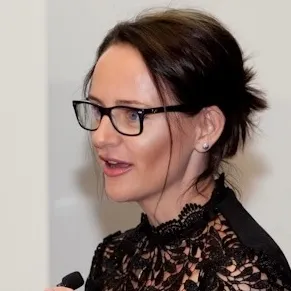
St James room - floor 4
Discussing how extant reporting frameworks for good spots and errors can, and should be repurposed to monitor AI bias and exploring new human factors in the era of AI.
St James room - floor 4
Churchill Auditorium - Ground floor
A fast-paced, forward-looking close to the conference, this session brings together a panel of diverse voices in AI to share their perspectives on what’s coming next.
The format is simple and dynamic: 3 minutes, 3 slides, 3 predictions. Each speaker, with audience participation, will offer their take on:
- The biggest change they foresee in AI over the next three years
- The most significant challenge or threat to AI adoption in healthcare
- The success story they hope — or expect — to see emerge
Designed to challenge thinking and spark discussion, this session will leave delegates with fresh insights, bold predictions, and plenty to reflect on as the conference concludes.






Churchill Auditorium - Ground floor
Join us as we begin day two of the 2nd Annual Global AI Conference 2026. The morning opens with a brief welcome before we dive into an inspiring keynote session to set the tone for another day of learning, collaboration and innovation.
09:00 - 09:05 Opening remarks - Professor Owen Arthurs, AI Conference Committee Chair
09:05 - 09:40 Moving fast and not breaking things: the future of regulating AI in healthcare - Professor Alastair Denniston, Chair of the National Commission, Regulation of AI in healthcare
In this keynote session, we will explore how regulation can be used as a tool to help shape the future of AI-enabled healthcare, and how we ensure it delivers the kind of health system we actually want. Drawing on the work of the Commission, the session will share insights from public, front-line professionals, and international experts, and consider what this perspectives could mean for the future regulation of AI in the UK. We will examine how the Commission is helping set the direction and the guard-rails that will define the future regulatory framework within which we will all be working and experiencing healthcare in. Ultimately, the session will focus on how we achieve the ‘Goldilocks’ state: creating regulation that is both sufficient and efficient, enabling innovation that will improve care while ensuring patient safety.
Westminster Room - floor 4
Explore the role of AI in transforming clinical leadership. Learn how AI tools can empower healthcare leaders to make better decisions and improve patient outcomes as well as potentially avoid staff burnout, maintain retention, and improve efficiencies across healthcare pathways.
Westminster Room - floor 4

Westminster Room - floor 4
Ophthalmology is among the most technology-driven of the all the medical specialties, with treatments utilizing high-spec medical lasers and advanced microsurgical techniques, and diagnostics involving ultra-high resolution imaging. Ophthalmology is also at the forefront of many trailblazing research areas in healthcare, such as stem cell therapy, gene therapy, and - most recently - artificial intelligence. In July 2016, Moorfields Eye Hospital announced a formal collaboration with the world’s leading artificial intelligence company, DeepMind. This collaboration involves the sharing of >1,000,000 anonymised retinal scans with DeepMind to allow for the automated diagnosis of diseases such as age-related macular degeneration (AMD) and diabetic retinopathy (DR). As a result of this collaboration, Moorfields received funding from the UK government to create INSIGHT, the Health Data Research Hub for Eye Health. INSIGHT is a Cloud-based data pipeline at Moorfields and our partner University Hospitals Birmingham. At Moorfields alone, INSIGHT consists of >35 million ophthalmic images paired with clinical metadata, making it the world’s largest ophthalmic imaging bioresource. In my presentation I will provide an overview of INSIGHT, share our learnings with regard to data governance and patient/public involvement, and describe our plans to use this resource to help create breakthroughs in ophthalmology on a global scale.

Westminster Room - floor 4
The government has bold ambitions for AI in healthcare, positioning it as a central pillar of the shift from analogue to digital and promising significant benefits for both patients and clinicians. But what does this transformation mean for the clinical workforce? In this talk, Dr Anne Kinderlerer will examine: the current state of digital confidence and AI use among physicians the education and training needed to develop future clinical leaders the implications of AI for clinician accountability and liability, and what it means to be a 'human in the loop' what governance, regulation and procurement processes are needed to give clinicians confidence to adopt AI safely and effectively why clinicians need to be supported to shape and co‑design AI tools to ensure they meet real clinical need

Westminster Room - floor 4
The promises in efficiency, efficacy and safety that AI brings can only materialise with customised education, robust governance and transformational leadership. While efforts have started towards the first two attributes of successful AI integration, leadership remains largely unexplored. This presentation will explore how and why medical imagers should lead and support AI implementation in Radiology and Radiography.

Westminster Room - floor 4
Westminster Room - floor 4
The integration of imaging data with other data sources is an incredibly fast moving space, driven by the expansion of foundation models for healthcare data and powerful large language models. In this session we will hear an update from research and commercial domains on what is state of the art for multimodal data processing with AI.
Westminster Room - floor 4

Westminster Room - floor 4
This talk will discuss where computational pathology may go beyond the foundation-model era. While pathology foundation models have improved performance across a wide range of downstream tasks, important challenges remain in interpretability, stability, and trustworthiness. I will briefly introduce recent progress in computational pathology, and then focus on a central question: does higher accuracy necessarily mean better cancer understanding? I will discuss our recent work on attention inconsistency across foundation models, together with practical directions such as multi-model fusion, lightweight distillation, and pathology models with built-in interpretability through visual and microenvironment graph branches. The overall aim is to move beyond accuracy alone and towards AI systems that are more reliable, auditable, and clinically meaningful for cancer research.

Westminster Room - floor 4
Radiologists rarely diagnose from an image alone; they synthesize scans with patient histories, lab results, and clinical notes. Yet, most multimodal AI models struggle when faced with the messy reality of clinical practice, where data is frequently incomplete, noisy, or unannotated. This talk explores recent advancements in building "resilient" multimodal AI designed specifically for these imperfect, real-world conditions. We will discuss novel machine learning strategies that tackle clinical data challenges head-on, from learning effectively without needing thousands of manual annotations, to training robust models on incomplete patient records, to deploying adaptive algorithms that can adjust on the fly when certain lab results or histories are missing at the point of care. Ultimately, this presentation demonstrates how next-generation AI can reliably fuse imaging and tabular data, bridging the gap between perfectly curated research datasets and the everyday realities of the reading room.

Westminster Room - floor 4
Large-scale digitisation of histopathology slides has created an opportunity to revisit how we discover new biomarkers. In this talk, I describe early work on a system to automatically generate natural-language hypotheses linking morphological features to disease labels. Our approach extracts interpretable visual concepts from whole-slide images, identifies those most relevant for a given clinical question, and synthesises them into clinician-readable explanations. I will discuss proof of concept results on well-studied cancer subtyping problems, open challenges in proposing and evaluating machine-generated hypotheses, and directions for future work.
Westminster Room - floor 4
Westminster Room - floor 4
Patient’s understanding of AI and its role is constantly evolving as we encounter it in different aspects of our life. In this session we'll focus our understanding on who is the intended beneficiary of AI technology, and what outcomes do we hope to achieve. We bring in perspectives from global cancer control to the ethical considerations of AI.
Westminster Room - floor 4

Westminster Room - floor 4

Westminster Room - floor 4
What happens when young people are invited into the earliest conversations about AI in healthcare? This talk shares the launch of a national AI Youth Council, bringing children and young people into real discussions about clinical AI, trust, and safety. It explores how the initiative was set up, the stakeholders involved, and most importantly how young people were meaningfully engaged to shape both the conversation on AI and the Council itself. It also looks ahead to future priorities including AVT, mental health chatbots, and other emerging areas identified by young people. These early insights offer a practical blueprint for moving from tokenistic involvement to genuine co-design in healthcare AI.

Westminster Room - floor 4
AI is fast influencing everyday life, including patient healthcare. Yet there is limited understanding of AI - what it is, how it works and what it brings. Patients' expectations of healthcare and clinicians are discussed and potential positive and negative impacts of AI are considered, including the impact on clinician to patient communication.
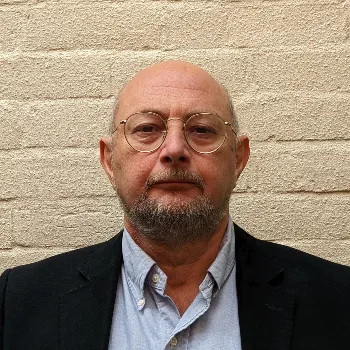
Westminster Room - floor 4
Churchill Auditorium - Ground floor
A fast-paced, forward-looking close to the conference, this session brings together a panel of diverse voices in AI to share their perspectives on what’s coming next.
The format is simple and dynamic: 3 minutes, 3 slides, 3 predictions. Each speaker, with audience participation, will offer their take on:
- The biggest change they foresee in AI over the next three years
- The most significant challenge or threat to AI adoption in healthcare
- The success story they hope — or expect — to see emerge
Designed to challenge thinking and spark discussion, this session will leave delegates with fresh insights, bold predictions, and plenty to reflect on as the conference concludes.
Churchill Auditorium - Ground floor
Join us as we begin day two of the 2nd Annual Global AI Conference 2026. The morning opens with a brief welcome before we dive into an inspiring keynote session to set the tone for another day of learning, collaboration and innovation.
09:00 - 09:05 Opening remarks - Professor Owen Arthurs, AI Conference Committee Chair
09:05 - 09:40 Moving fast and not breaking things: the future of regulating AI in healthcare - Professor Alastair Denniston, Chair of the National Commission, Regulation of AI in healthcare
In this keynote session, we will explore how regulation can be used as a tool to help shape the future of AI-enabled healthcare, and how we ensure it delivers the kind of health system we actually want. Drawing on the work of the Commission, the session will share insights from public, front-line professionals, and international experts, and consider what this perspectives could mean for the future regulation of AI in the UK. We will examine how the Commission is helping set the direction and the guard-rails that will define the future regulatory framework within which we will all be working and experiencing healthcare in. Ultimately, the session will focus on how we achieve the ‘Goldilocks’ state: creating regulation that is both sufficient and efficient, enabling innovation that will improve care while ensuring patient safety.
Moore/Rutherford room - floor 4
The UK's regulatory landscape for AI medical devices is evolving rapidly. Join our expert panelists for an insider's perspective on the latest updates. This interactive panel discussion will unpack what these changes mean for manufacturers, clinicians, and healthcare systems. From pre-market requirements to post-market surveillance, discover the latest advancements in adapting regulation to match AI's unique challenges. Bring your questions and engage directly with those shaping the future of AI medical device oversight.
Moore/Rutherford room - floor 4
Moore/Rutherford room - floor 4
AI tools are live in our departments — but are we watching them closely enough? This session presents a practical three-pillar framework for post-market surveillance. Drawing on real world examples, attendees will leave with a framework and practical questions to apply in their own organisations.

Moore/Rutherford room - floor 4
2026 is a pivotal moment for the regulation of AI medical devices in the UK. With recommendations from the National Commission into the Regulation of AI in Healthcare on the near horizon, programme outputs from phase 2 of the MHRA’s AI Airlock recently published, and new sandboxes and innovative programmes forming, the MHRA is aiming to help enable key commitments in the government’s 10 -Year Health Plan for England and Life Sciences Sector Plan. This talk will cover some of the MHRA’s latest work and forward-looking approaches for ensuring proportionate, fit-for-purpose regulation of innovative AI and software devices.

Moore/Rutherford room - floor 4
The AI Ambassador Network was launched in January 2025, providing a bridge between AI policy and practice and open to anyone with an interest in AI In health and care. Ian Baines (NHS Horizons) and Alison Tweed (NHSE/DHSC) provide their perspectives on the founding, growth and success of the network as it has become one of the largest learning communities for AI in health and care in the world. They will highlight members’ interests and concerns and describe how the network has developed into a partnership for policy development.


Moore/Rutherford room - floor 4
Moore/Rutherford room - floor 4
How do we develop AI policy that balances innovation with protection? In this session, we explore the critical challenge of creating trustworthy AI frameworks that serve society. The discussion will touch on policies and governance structures needed for safe, effective AI deployment in healthcare and beyond. From legislative priorities to practical implementation, discover how policymakers, regulators, and clinicians are collaborating to shape AI's future. Join the conversation on building public trust while enabling transformational technology to flourish responsibly.
Moore/Rutherford room - floor 4

Moore/Rutherford room - floor 4
This session focuses on developing practical AI policy that enables innovation while safeguarding patients and the public. Drawing on real-world experience in healthcare, it demonstrates how policymakers, regulators, and system leaders can design proportionate governance frameworks to support safe and effective AI deployment. Key considerations include risk-based regulation, assurance mechanisms, implementation challenges, and approaches to building public trust, ensuring AI delivers meaningful impact while remaining accountable and safe.

Moore/Rutherford room - floor 4
Public polling is consistent: people want AI regulation, while government policy is moving in the opposite direction. This session maps the evolution of the UK's AI governance landscape over the past three years, from the optimism of the 2023 AI Safety Summit, through Labour's early regulatory pledges, to the current pro-innovation, light-touch approach. It asks who that shift serves, where the gaps are, and what a policy framework that reflects public expectations would need to look like.

Moore/Rutherford room - floor 4
Overview of US national quality assurance framework and registry for safe and effective deployment and post-deployment monitoring of imaging AI.
Moore/Rutherford room - floor 4
Moore/Rutherford room - floor 4
Traditional regulatory frameworks weren't built for technologies that learn and evolve. This session explores how regulatory science itself must innovate to keep pace with AI. Hear insights from CERSI-AI (Centers of Excellence in Regulatory Science and Innovation for AI) and the National Commission on AI Regulation as they pioneer new methodologies for evaluating algorithmic systems.
You'll learn how cutting-edge research is informing evidence standards, validation approaches, and assessment frameworks specifically designed for AI's unique characteristics. From adaptive trial designs to real-world performance monitoring, you'll explore the scientific innovations reshaping how we evaluate and oversee AI technologies in healthcare.
Moore/Rutherford room - floor 4

Moore/Rutherford room - floor 4
In this session we will explore how the national centre of excellence, CERSI-AI, has been leading research to improve how we evaluate, regulate and implement AI health technologies. We will be introduced to the concept of a CERSI, how the national CERSIs work with the the MHRA and other regulators, and how they provide a mechanism for bringing the scientific lens to understand and solve the urgent and important questions of AI-enabled healthcare.
Moore/Rutherford room - floor 4
This session will explore how the medical regulator is actively exploring how it can support providers and registrants to integrate AI in a safe, ethical and effective way into clinical care.

Moore/Rutherford room - floor 4
Published evidence and regulatory approval are essential foundations for the safe implementation of AI as a Medical Device, but they do not guarantee safe, effective or equitable performance in every local clinical setting. This session will explore how algorithmic audit can bridge the gap between published evidence and real-world clinical practice. The talk will examine the role of local validation, subgroup analysis and continuous monitoring in understanding how AI performance varies across populations and workflows. It will also consider how audit findings can support ongoing surveillance, governance decisions, and failure analyses. By positioning algorithmic audit within a continuous assurance lifecycle, the session will highlight how healthcare organisations can move beyond one-off validation studies towards safe, monitored and accountable deployment of clinical AI.

Moore/Rutherford room - floor 4
Churchill Auditorium - Ground floor
A fast-paced, forward-looking close to the conference, this session brings together a panel of diverse voices in AI to share their perspectives on what’s coming next.
The format is simple and dynamic: 3 minutes, 3 slides, 3 predictions. Each speaker, with audience participation, will offer their take on:
- The biggest change they foresee in AI over the next three years
- The most significant challenge or threat to AI adoption in healthcare
- The success story they hope — or expect — to see emerge
Designed to challenge thinking and spark discussion, this session will leave delegates with fresh insights, bold predictions, and plenty to reflect on as the conference concludes.
Churchill Auditorium - Ground floor
Join us as we begin day two of the 2nd Annual Global AI Conference 2026. The morning opens with a brief welcome before we dive into an inspiring keynote session to set the tone for another day of learning, collaboration and innovation.
09:00 - 09:05 Opening remarks - Professor Owen Arthurs, AI Conference Committee Chair
09:05 - 09:40 Moving fast and not breaking things: the future of regulating AI in healthcare - Professor Alastair Denniston, Chair of the National Commission, Regulation of AI in healthcare
In this keynote session, we will explore how regulation can be used as a tool to help shape the future of AI-enabled healthcare, and how we ensure it delivers the kind of health system we actually want. Drawing on the work of the Commission, the session will share insights from public, front-line professionals, and international experts, and consider what this perspectives could mean for the future regulation of AI in the UK. We will examine how the Commission is helping set the direction and the guard-rails that will define the future regulatory framework within which we will all be working and experiencing healthcare in. Ultimately, the session will focus on how we achieve the ‘Goldilocks’ state: creating regulation that is both sufficient and efficient, enabling innovation that will improve care while ensuring patient safety.
Churchill Auditorium - Ground floor
Hear from experts from different specialisms how AI is challenging traditional models of care delivery.
Churchill Auditorium - Ground floor
Churchill Auditorium - Ground floor
Introduction of AI interpretation of images presents unique opportunity to optimise downstream workflows but often requires transformation of pathways. In this session using examples of thoracic CT and CXR will describe how clinical and cost effectiveness can be demonstrated for patient outcomes.

Churchill Auditorium - Ground floor
AI is already transforming the way healthcare is delivered. However - in fast moving acute care settings, the challenging last mile of development and implementation is particularly hard to navigate. In this talk we will explore the challenge, and the opportunity if we get this right.

Churchill Auditorium - Ground floor
How data will inform perioperative decision making across the whole pathway from contemplation of surgery through to full recovery

Churchill Auditorium - Ground floor
Churchill Auditorium - Ground floor
Beyond automation - this session explores the next frontier of agentic AI systems capable of autonomous decision-making and adaptive learning, and how they could safely transform healthcare delivery, regulation, and accountability.
Churchill Auditorium - Ground floor
Churchill Auditorium - Ground floor
This session explores how healthcare organizations across the globe are combining medical imaging, artificial intelligence and cloud infrastructure to transform diagnostic pathways and patient outcomes. Drawing on real-world examples from health systems in Europe, North America, Asia-Pacific and the Middle East, Dr. Illing will highlight common patterns of success, remaining barriers to scale, and the role of cloud as the enabling platform for AI deployment in radiology and beyond.

Churchill Auditorium - Ground floor
This session introduces TrustX Health, a national agentic AI healthcare initiative designed to move beyond isolated AI tools toward coordinated, autonomous systems that can act safely, transparently, and at scale across health and care pathways. It will explore how agentic AI—systems capable of reasoning, decision-support, and task execution—can augment clinical workflows, improve patient access and outcomes, and enable more proactive, personalised care. Drawing on real-world NHS innovation challenges, the talk will examine the governance, trust architecture, and interoperability frameworks required to deploy such systems responsibly, alongside the cultural and operational shifts needed to support adoption. The session will provide practical insights into how TrustX Health aims to align policy, infrastructure, and frontline delivery to unlock the next phase of AI-enabled healthcare transformation.

Churchill Auditorium - Ground floor
As AI advances from passive medical imaging tools to agentic systems capable of clinical reasoning, decision support, and workflow execution, impressive benchmark performance can mask critical vulnerabilities. This talk presents comprehensive validation frameworks for systematically assessing the reliability and safety of AI under adversarial conditions. We will demonstrate how imperceptible data perturbations can trigger catastrophic failures, and present verification-based techniques that provide formal robustness guarantees against distribution shifts. Finally, we will examine the evaluation of agentic AI through a principled gold-team/red-team methodology, highlighting approaches for stress-testing autonomous systems and identifying failure modes before deployment. Together, these methods offer a foundation for building trustworthy AI systems for high-stakes healthcare applications.
Churchill Auditorium - Ground floor
Churchill Auditorium - Ground floor
Discover how AI can streamline complex clinical pathways, from image analysis to data integration, enabling more efficient multidisciplinary working and freeing clinicians to focus on patient-centred decisions.
Churchill Auditorium - Ground floor

Churchill Auditorium - Ground floor

Churchill Auditorium - Ground floor
Ten years ago, many experts predicted machine learning would displace much of the work of radiologists. Since then, a substantial radiology AI industry has arisen, with more than 100 AI companies exhibiting at the most recent radiology professional meeting and more than three-quarters of FDA cleared AI/ML software devices targeting radiology. As the shortage of radiologists grows, and as we gain experience with the actual use of AI systems, extensive commentary has questioned how AI will affect the radiology workforce. The growing scientific literature regarding the effect of AI algorithms on radiology tasks enabled us for the first time to make specific predictions about the effect of AI. We will present a quantitative task-based analysis to project the effects of AI on the radiology work force in the next 5 years using the best available evidence. The analysis is of clear interest not only to radiologists, but also to many other stakeholders, including medical students choosing a medical specialty, radiologists-in-training who will be affected by these developments throughout their careers, other medical professionals who may see AI’s effects in radiology as a leading indicator of how AI may affect their workforce.

Churchill Auditorium - Ground floor
The integration of artificial intelligence into cancer care is rapidly transforming the field of oncology, offering opportunities to enhance patient outcomes and healthcare efficiency through improved diagnostics, personalized treatments, and effective resource management. Current research in AI applications in oncology focuses on several key areas including digital pathology, medical imaging, analysis of complex multi-omics data, biomarker development, optimization of radiotherapy treatment planning, drug discovery, and predictive modeling of patient outcomes. These breakthroughs pave the way for precision oncology enabling the individualization of treatment plans tailored to specific patient and tumor characteristics. Nonetheless, despite these promising developments, challenges remain in the integration of AI into daily practice. Data bias and the interpretability of AI models are crucial factors for clinical adoption. Ethical considerations surrounding patient privacy, data security, and liability issues also warrant careful attention. To fully realize the potential of AI in cancer care, close collaboration among oncologists, specialists in other medical disciplines, data scientists, and policymakers is essential for establishing robust frameworks for implementation. This talk will review current advances in AI applications in oncology alongside the challenges that lie ahead.

Churchill Auditorium - Ground floor
Churchill Auditorium - Ground floor
A fast-paced, forward-looking close to the conference, this session brings together a panel of diverse voices in AI to share their perspectives on what’s coming next.
The format is simple and dynamic: 3 minutes, 3 slides, 3 predictions. Each speaker, with audience participation, will offer their take on:
- The biggest change they foresee in AI over the next three years
- The most significant challenge or threat to AI adoption in healthcare
- The success story they hope — or expect — to see emerge
Designed to challenge thinking and spark discussion, this session will leave delegates with fresh insights, bold predictions, and plenty to reflect on as the conference concludes.
Churchill Auditorium - Ground floor
Join us as we begin day two of the 2nd Annual Global AI Conference 2026. The morning opens with a brief welcome before we dive into an inspiring keynote session to set the tone for another day of learning, collaboration and innovation.
09:00 - 09:05 Opening remarks - Professor Owen Arthurs, AI Conference Committee Chair
09:05 - 09:40 Moving fast and not breaking things: the future of regulating AI in healthcare - Professor Alastair Denniston, Chair of the National Commission, Regulation of AI in Healthcare
In this keynote session, we will explore how regulation can be used as a tool to help shape the future of AI-enabled healthcare, and how we ensure it delivers the kind of health system we actually want. Drawing on the work of the Commission, the session will share insights from public, front-line professionals, and international experts, and consider what this perspectives could mean for the future regulation of AI in the UK. We will examine how the Commission is helping set the direction and the guard-rails that will define the future regulatory framework within which we will all be working and experiencing healthcare in. Ultimately, the session will focus on how we achieve the ‘Goldilocks’ state: creating regulation that is both sufficient and efficient, enabling innovation that will improve care while ensuring patient safety.
Abbey room - floor 4

Abbey room - floor 4
This taster session is drawn from the RCR's acclaimed Clinical Radiology AI Course 1: AI Fundamentals for Imaging and Healthcare. It aims to provide an accessible introduction to the technical concepts underpinning modern AI.
Abbey room - floor 4
When AI fails in clinical practice, bias is often the reason. This session examines where bias emerges in healthcare datasets, how it affects performance across patient groups, and what clinicians must do to safeguard safe implementation.

Abbey room - floor 4
This introductory session is based on RCR’s highly successful blended learning programmes, which cover the fundamentals of AI and real-world implementation. It provides insights into how to critically appraise an AI tool and ensure its structured, safe and compliant deployment in clinical practice.

Abbey room - floor 4
Abbey room - floor 4

Abbey room - floor 4
Moderated by: Dr Nicky Thorp, Vice President, Clinical Oncology, The Royal College of Radiologists, UK
In this resident-led debate, pairs of senior clinical oncology trainees from the Oncology Resident Forum (ORF), alongside CO AI faculty, will argue for and against the motion. Together, they will explore how AI is reshaping radiotherapy planning, what competencies future oncologists must retain, and how innovation can be balanced with responsibility, training standards and patient safety.




Abbey room - floor 4
Dr Hanna will bring the latest update on oncology curriculum changes and how AI will influence the curriculumin in the future.
Exhibition Hall - Fleming and Whittle, floor 3, for in person only attendees
Glenda Shaw, Quality Improvement Partner (RCR, CoR), will present a brief overview of the development of the Quality Standards for Imaging (QSI), including the key drivers for the forthcoming QSI 2026 update. Attendees will gain an early preview of the latest artificial intelligence standards and their practical implications for imaging services. The session will highlight what services need to consider when demonstrating compliance, preparing for implementation and working towards the College’s Quality Mark.
Churchill Auditorium - Ground floor
A fast-paced, forward-looking close to the conference, this session brings together a panel of diverse voices in AI to share their perspectives on what’s coming next.
The format is simple and dynamic: 3 minutes, 3 slides, 3 predictions. Each speaker, with audience participation, will offer their take on:
- The biggest change they foresee in AI over the next three years
- The most significant challenge or threat to AI adoption in healthcare
- The success story they hope — or expect — to see emerge
Designed to challenge thinking and spark discussion, this session will leave delegates with fresh insights, bold predictions, and plenty to reflect on as the conference concludes.